
What is the relationship between ragweed allergy and food?
This article explains foods to be careful of, as well as dietary and self-care methods to get through autumn hay fever.
Did you know that even if you have a ragweed pollen allergy, eating melon or watermelon can sometimes make your mouth itchy?
Did you know there's a surprising connection between pollen and food? I'll introduce foods to avoid, how to deal with symptoms, and tips for getting through the autumn pollen season with healthy eating and self-care!
People with ragweed allergies may experience itching in their mouth or throat after eating certain foods, but some may wonder why food triggers allergic symptoms and what the relationship is between food and ragweed allergies.
This article explains foods that people with ragweed allergies should avoid, as well as tips for getting through the autumn ragweed pollen season.
We will also discuss the causes of itchy mouths from certain foods, as well as the differences between the symptoms of hay fever and food allergies.
If you'd like to learn more about the relationship between ragweed allergies and food, please refer to this information.
Index
- ブタクサとは
- Certain foods can cause itching in the mouth or throat.
- The reaction to food is due to cross-reactivity.
- Differences in symptoms between hay fever and food allergies
- Fruits and vegetables that are prone to cross-reactivity with ragweed
- In some cases, it can be eaten after being cooked.
- Tests and treatments performed in hospitals
- Be mindful of foods that help with hay fever prevention.
ブタクサとは
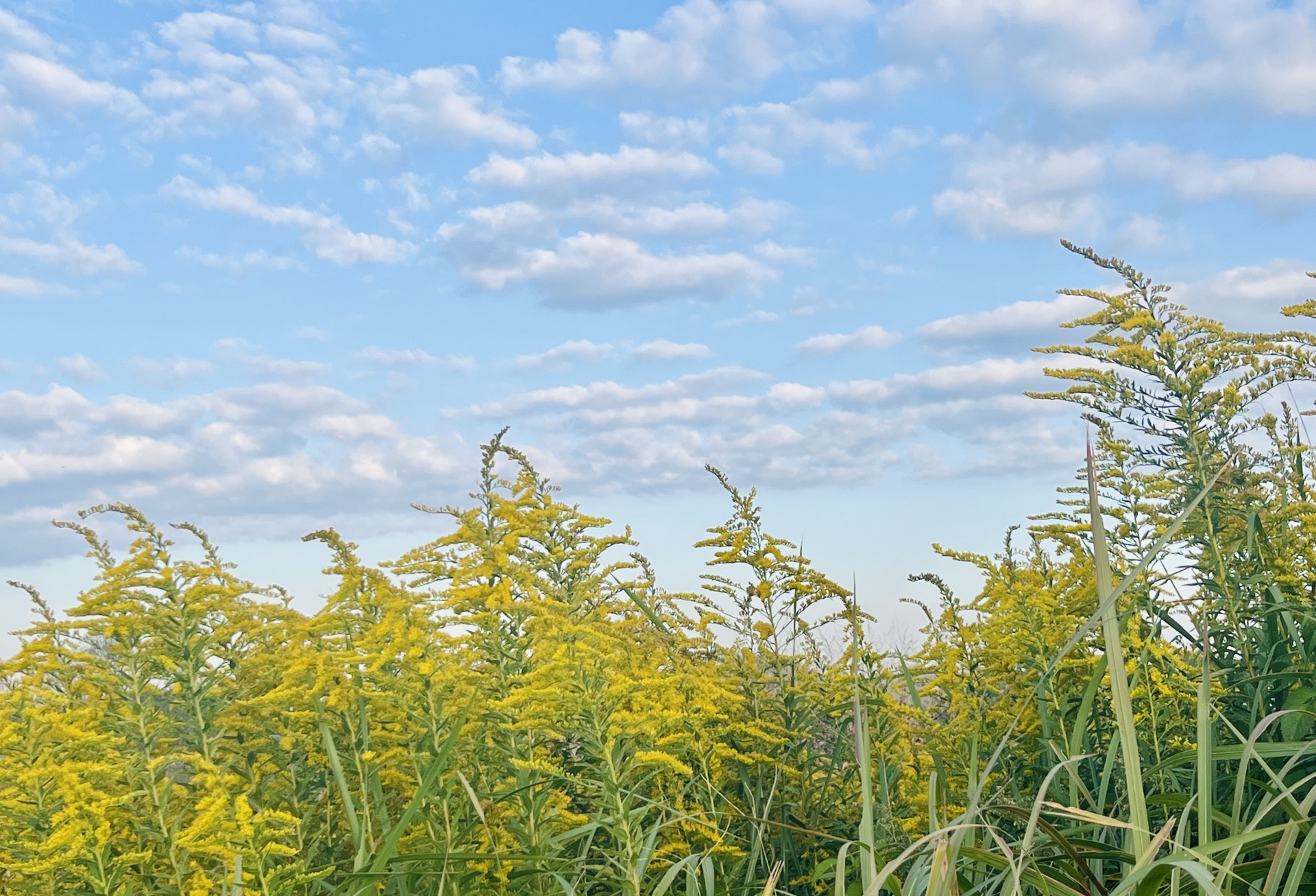
Ragweed is an annual plant belonging to the Asteraceae family, growing to a height of approximately 30-150 cm. Male flower spikes appear at the tips of the branches, and the leaves have deep, jagged incisions. *1
Ragweed is distributed throughout Japan and is commonly found in riverbeds, fields, and vacant lots. It is also an anemophilous flower, meaning its pollen is carried by the wind, and its pollen is dispersed from late summer to autumn. *2 *3
The relationship between ragweed allergy and food
When people with ragweed allergies eat certain foods, the pollen antigens and food antigens can cross-react, causing itching in the mouth and throat. *4
Symptoms of hay fever include sneezing, runny nose, nasal congestion, and itchy eyes. *2
In contrast, food allergies caused by cross-reactivity primarily result in itching of the mouth, throat, lips, and tongue, but rarely, symptoms such as bronchial asthma or hives may also occur. *4
This article provides a detailed explanation of the relationship between ragweed allergies and food.
Certain foods can cause itching in the mouth or throat.
People with ragweed allergies may experience itching or swelling in their mouth or throat after eating gourds such as melons and watermelons, or bananas, which belong to the banana family. *4
Itching and swelling in the mouth often appear immediately after eating certain foods and subside within about an hour. *4
The reaction to food is due to cross-reactivity.
When people with ragweed allergies experience allergic symptoms in their mouths after eating certain foods, it's due to a cross-reaction.
Specifically, cross-reactions occur in the following sequence, leading to symptoms of food allergies. *4 *5
- Ragweed pollen enters the body
- Antibodies that recognize ragweed pollen are produced.
- Antibodies bind to mast cells.
- Consume foods that contain protein antigens similar to ragweed pollen.
- Mast cells bound to antibodies also react to food.
- Allergic reactions can occur, causing itching and swelling in the mouth and throat.
Ragweed pollen is prone to cross-reactivity with foods from the Cucurbitaceae and Musaceae families. Mast cells that bind to antibodies distributed in the mouth cross-react with these foods, causing itching and swelling of the mouth, tongue, and lips.
Differences in symptoms between hay fever and food allergies
The symptoms of hay fever and food allergies differ as follows: *2 *4
[Symptoms of hay fever]
- sneeze
- Runny nose
- stuffy nose
- Itchy eyes
- Rarely, it can be accompanied by asthma or atopic dermatitis.
[Symptoms of food allergies]
- Itching of the mouth, tongue, and lips
- Swelling of the mouth, tongue, and lips
- In rare cases, nasal symptoms, skin symptoms, digestive symptoms, and respiratory symptoms may also occur.
Hay fever primarily manifests as symptoms of allergic rhinitis and allergic conjunctivitis. In contrast, symptoms of food allergies are often limited to the mouth.
However, in rare cases, both can cause symptoms other than the main one, and it has been reported that food allergies can sometimes lead to anaphylaxis due to the co-occurrence of other symptoms. *4
Foods that people with ragweed allergies should be careful about

Some people with ragweed allergies experience itching in their mouth or throat after eating certain foods, such as melon or watermelon. If you have experienced symptoms from a particular food, you should avoid consuming it and consult a medical professional.
This article will specifically list foods that are prone to cross-reaction with ragweed, and explain cases where they can be eaten after cooking.
Fruits and vegetables that are prone to cross-reactivity with ragweed
Ragweed is prone to cross-reaction with the following foods: *4 *6
- melon
- watermelon
- zucchini
- cucumber
- banana
Ragweed pollen tends to cross-react with foods from the Cucurbitaceae and Musaceae families, as well as some spices.
Furthermore, individuals who are allergic to ragweed, marigolds, and other plants in the Asteraceae family may also experience cross-reactions with chamomile.
In some cases, it can be eaten after being cooked.
Even foods that are prone to cross-reactions with ragweed may be safe to eat if they are cooked thoroughly.
Proteins in food can change shape when heated. Because antibodies are less likely to bind to altered proteins, this mechanism reduces the likelihood of food allergy symptoms. *5
However, the heat resistance of allergens in food varies depending on the type. If the allergen causing the cross-reaction is a heat-resistant type, an allergic reaction may still occur even after cooking, so it is important not to assume that heating will always eliminate allergic symptoms. *4
How to deal with allergic reactions to food and when to seek medical attention.

If you experience allergic symptoms from food, first assess the severity of the reaction.
If you experience discomfort in your mouth or throat, stop consuming the suspected food. If symptoms persist or worsen, consult a medical professional. If you experience symptoms such as difficulty breathing, lethargy, or repeated vomiting, you should call for emergency services immediately. *4
If you notice even one of the following symptoms, seek medical attention immediately: lethargy, pale lips or nails, difficulty breathing, or persistent vomiting. *7
This article provides a detailed explanation of the tests and treatments available for investigating food allergies.
Tests and treatments performed in hospitals
Tests to check for food allergies include prick tests and serum-specific IgE testing.
A prick test, in which a needle pierced with raw food is inserted into the patient's skin to observe the reaction, and a blood test to check for the presence of antibodies called specific IgE are performed. If both are positive, a food allergy due to cross-reactivity is diagnosed, and the offending food can be identified. *4
Allergen immunotherapy is one of the treatments that offers the potential for a complete cure of allergies, but its effectiveness against food allergies caused by cross-reactivity is still under investigation. Therefore, at present, if allergy symptoms are limited to the mouth, observation or oral antihistamines are the only options. *4
However, if systemic symptoms are present, treatment will be provided in accordance with anaphylaxis guidelines.
Diet and self-care to get through the autumn ragweed pollen season

Those with ragweed allergies need to take measures to minimize exposure to pollen. Additionally, a well-balanced diet is essential for managing hay fever symptoms.
Here are some dietary and self-care tips to help you get through autumn when ragweed pollen is flying around.
Prevent pollen from entering your body.
To prevent ragweed pollen from entering your body, the following self-care measures are effective. *3
- Wear a mask
- Wearing glasses
- Avoid wool clothing.
- When returning home, remove pollen outside.
- Gargle and wash your face.
- When ventilating, close the sheer curtains and open the windows about 10 cm.
When going outside, it's a good idea to wear a mask and glasses to prevent pollen from entering your body, and to wear clothing made of cotton, silk, or synthetic fibers, as these materials tend to reduce the amount of pollen that sticks to your clothes.
Removing pollen before entering your home and gargling and washing your face after returning home can reduce the amount of pollen that enters your body.
By incorporating ventilation techniques, you can significantly reduce the amount of pollen entering your home compared to simply opening the windows completely.
To prevent pollen from entering your body, it's important to take measures beyond the usual ones like masks and glasses.
Be mindful of foods that help with hay fever prevention.
To keep your immune system functioning and prevent your hay fever symptoms from worsening, make sure to eat a well-balanced diet.
The following foods, which contain dietary fiber, vitamins, polyphenols, EPA, and DHA, are thought to help stabilize immune function and suppress inflammation. *8
- Fermented food
- Seaweed
- Blue fish
- Vegetables
- fruit
On the other hand, consuming foods high in saturated fatty acids (such as fatty meats and butter) or excessive alcohol consumption may worsen symptoms.
Therefore, it is important to eat a diet that includes other nutrients as well, rather than relying solely on the foods mentioned above.
Including a staple food, main dish, and side dishes helps to create a balanced diet, which can be helpful in combating hay fever.
Summary

People with ragweed allergies may experience itching in the mouth and throat due to cross-reactions after eating melon, watermelon, banana, etc. Symptoms usually appear within a few minutes of eating the offending food and subside within about an hour, so observe your condition.
In rare cases, bronchial asthma or hives may occur, or other symptoms may develop, potentially leading to anaphylaxis. If you experience any systemic symptoms, seek medical attention immediately.
Ragweed pollen is dispersed from late summer through autumn. During the pollen season, it is important to wear a mask and glasses to prevent pollen from entering your body, and to remove any pollen outside before entering your home.
Make it a habit to eat meals that provide your body with a balanced intake of essential nutrients, and you'll be able to get through autumn hay fever.
Reference site
- *1 National Institute for Environmental Studies | Invasive Species Database
- *2 Ministry of the Environment | Pollen Allergy Environmental Health Manual 2022
- *3 Ministry of the Environment | Ecozine February/March 2019 Issue VOLUME.69 | Hay Fever
- *4 Journal of the Japanese Society of Otorhinolaryngology, Immunology, Allergy and Infectious Diseases | Pollen Allergy Syndrome
- *5 Food Allergy Research Association | Basic Knowledge of Food Allergies
- *6 Ministry of Health, Labour and Welfare eJIM | Chamomile [Herbs - Healthcare Professionals]
- *7 Environmental Restoration and Conservation Agency | Food Allergy Emergency Response Manual
- *8 Juntendo University Hospital | Juntendo Hospital News April 2026

村瀬由真
As a registered dietitian, I worked at psychiatric hospitals and catering companies, where I was involved in nutritional management, menu planning, and the development of dysphagia-friendly foods.
Currently, as a freelancer, I write and supervise articles mainly in the fields of health, food, and nutrition, as well as creating menus and providing nutritional supervision for food products.
Based on the experience and expertise cultivated in medical and food service settings, we prioritize carefully examining reliable information and communicating it in an easy-to-understand format that can be easily incorporated into daily life.


